
Book Appointment Now

Knee & Joint Injections in Altrincham for Pain, Arthritis & Injury
Our knee and joint injections in Altrincham can provide different treatment options for people experiencing osteoarthritis, persistent joint pain, inflammation or selected injuries. At Altri Medical, our doctor-led approach begins with an assessment to understand what is causing your symptoms before discussing whether PRP, steroid or gel injections may be appropriate. You do not need to know which injection you need before booking your consultation.
Doctor-Led Joint Care Focused on the Right Treatment
- Medical assessment before an injection is recommended
- Treatment delivered by qualified medical professionals
- PRP, steroid and gel injection options considered according to suitability
- Personalised recommendations based on your symptoms and medical history
- Clear discussion of potential benefits, risks and limitations
- Treatment-specific recovery and aftercare guidance
- Central clinic at 35a Stamford New Road, Altrincham, WA14 1EB
Which Knee or Joint Injection Is Right for Me?
There is no single injection that is right for every type of joint pain. PRP, corticosteroid and gel injections use different substances, have different intended roles and need to be considered in the context of your diagnosis.
The first step is therefore establishing the likely cause of your symptoms. Your doctor will consider factors such as your medical history, severity and duration of symptoms, previous injuries and treatments, current medication and how your joint problem affects everyday movement.
Further investigation may be recommended if the cause of your pain is unclear.
PRP Injections for Knee & Joint Pain
Platelet-rich plasma, or PRP, is prepared from a sample of your own blood. The blood is processed in a centrifuge to concentrate the platelet-rich plasma before it is injected into the affected area.
PRP takes a different approach to corticosteroid injections because it does not primarily rely on anti-inflammatory steroid medication. It may be considered for selected people with osteoarthritis, joint discomfort or certain injuries following clinical assessment.
PRP does not guarantee pain relief or regenerate severely damaged joints. Results vary according to the underlying problem and individual response.
You can also learn more about our wider joint PRP treatments and regenerative medicine.
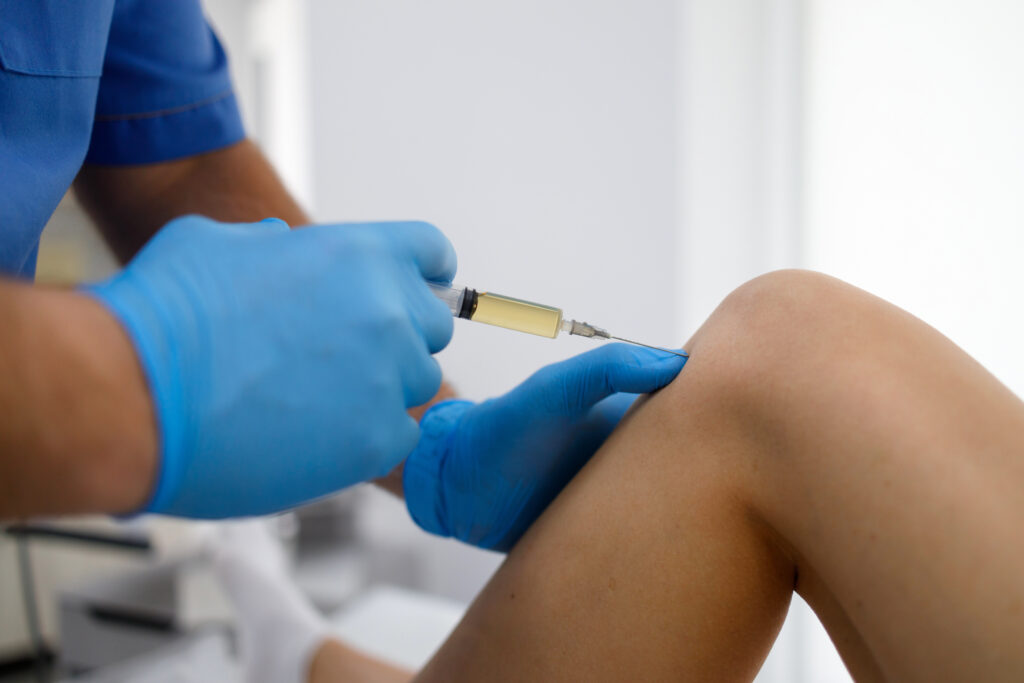

Steroid Injections for Arthritis & Joint Inflammation
Corticosteroid injections are designed to reduce inflammation and may provide short-term relief from pain, swelling and stiffness in selected patients.
For osteoarthritis, corticosteroid injections may be considered when other pharmacological treatments are ineffective or unsuitable, or when short-term symptom relief could support therapeutic exercise.
Steroid injections do not repair damaged cartilage or cure arthritis. Their effects are temporary, and repeated injections require careful clinical consideration.
Gel Injections for Knees
Gel injections commonly refer to injections containing hyaluronic acid or hyaluronan, substances related to components naturally present within joint fluid. They are sometimes discussed as an injectable option for people with knee osteoarthritis and joint discomfort.
Gel injections do not cure arthritis or rebuild damaged cartilage.

PRP vs Steroid vs Gel Joint Injections
Each injection has a different purpose, and treatment choice should be based on clinical assessment rather than selecting an injection by name.
| Comparison | PRP Injections | Steroid Injections | Gel Injections |
|---|---|---|---|
| What Is Injected? | Platelet-rich plasma prepared from your blood | Corticosteroid medication | Hyaluronic acid or hyaluronan |
| Primary Approach | Regenerative treatment for selected joint problems | Reducing inflammation for short-term symptom relief | Supplementing substances associated with natural joint fluid |
| Is It a Cure for Arthritis? | No | No | No |
| Can It Rebuild Damaged Cartilage? | Not established as a treatment for regenerating severely damaged joints | No | No |
| Key Consideration | Suitability and response vary between patients | Relief is generally short term | NICE recommends against hyaluronan injections for osteoarthritis |
PRP Injections
What Is Injected?
Platelet-rich plasma prepared from your blood
Primary Approach
Regenerative treatment for selected joint problems
Is It a Cure for Arthritis?
No
Can It Rebuild Damaged Cartilage?
Not established as a treatment for regenerating severely damaged joints
Key Consideration
Suitability and response vary between patients
Steroid Injections
What Is Injected?
Corticosteroid medication
Primary Approach
Reducing inflammation for short-term symptom relief
Is It a Cure for Arthritis?
No
Can It Rebuild Damaged Cartilage?
No
Key Consideration
Relief is generally short term
Gel Injections
What Is Injected?
Hyaluronic acid or hyaluronan
Primary Approach
Supplementing substances associated with natural joint fluid
Is It a Cure for Arthritis?
No
Can It Rebuild Damaged Cartilage?
No
Key Consideration
NICE recommends against hyaluronan injections for osteoarthritis
The most appropriate option depends on your diagnosis, symptoms, previous treatment and overall health. In some cases, an injection may not be the right next step at all.
Discuss Which Option May Be Suitable for YouWhat Happens During Your Joint Assessment?
-
01
Medical Consultation
Your doctor will discuss where you experience pain, how long it has been present, what affects it and any previous diagnoses, injuries or treatments.
-
02
Treatment Recommendation
Where an injection may be appropriate, your doctor will explain the relevant options, expected role of treatment, potential risks and realistic limitations.
-
03
Treatment & Aftercare
If you proceed, the injection is administered according to the agreed treatment plan. You will receive personalised advice about activity, recovery, possible short-term effects and when to seek further medical advice.
Frequently Asked Questions About Men's Health & Urology
Which Injection Is Best for Knee Arthritis?
There is no single injection that is best for every patient. PRP, corticosteroid and gel injections work differently, and current clinical guidance also differs between treatments. Your diagnosis, severity of osteoarthritis, previous treatment and medical history should be considered before an injection is recommended.
Are Joint Injections Only for Arthritis?
No. Injection-based treatments may be considered for different joint problems depending on the treatment and diagnosis. Persistent pain can also have causes that require investigation or a different approach, which is why assessment comes before treatment.
How Quickly Do Joint Injections Work?
It depends on the type of injection and your individual response. Steroid injections are intended for relatively short-term symptom relief, while PRP follows a different treatment pathway and improvement may develop more gradually.
Do These Treatments Repair Damaged Cartilage?
PRP, steroid and gel injections have different intended roles, but none should be considered a guaranteed method of reversing advanced joint damage.
Do I Need to Know Which Injection I Want Before Booking?
No. You can arrange an assessment based on your knee or joint symptoms rather than choosing a specific injection yourself. Your doctor can assess your concerns and explain which options, if any, are appropriate.
Arrange Your Joint Assessment in Altrincham
If knee pain, arthritis or another joint problem is affecting your movement or everyday activities, the first step is understanding the cause and your treatment options. At Altri Medical Ltd, our doctor-led approach allows you to compare PRP, steroid and gel injections while receiving clear guidance about suitability, limitations and appropriate alternatives.
Get in touch today or call 0161 531 7727